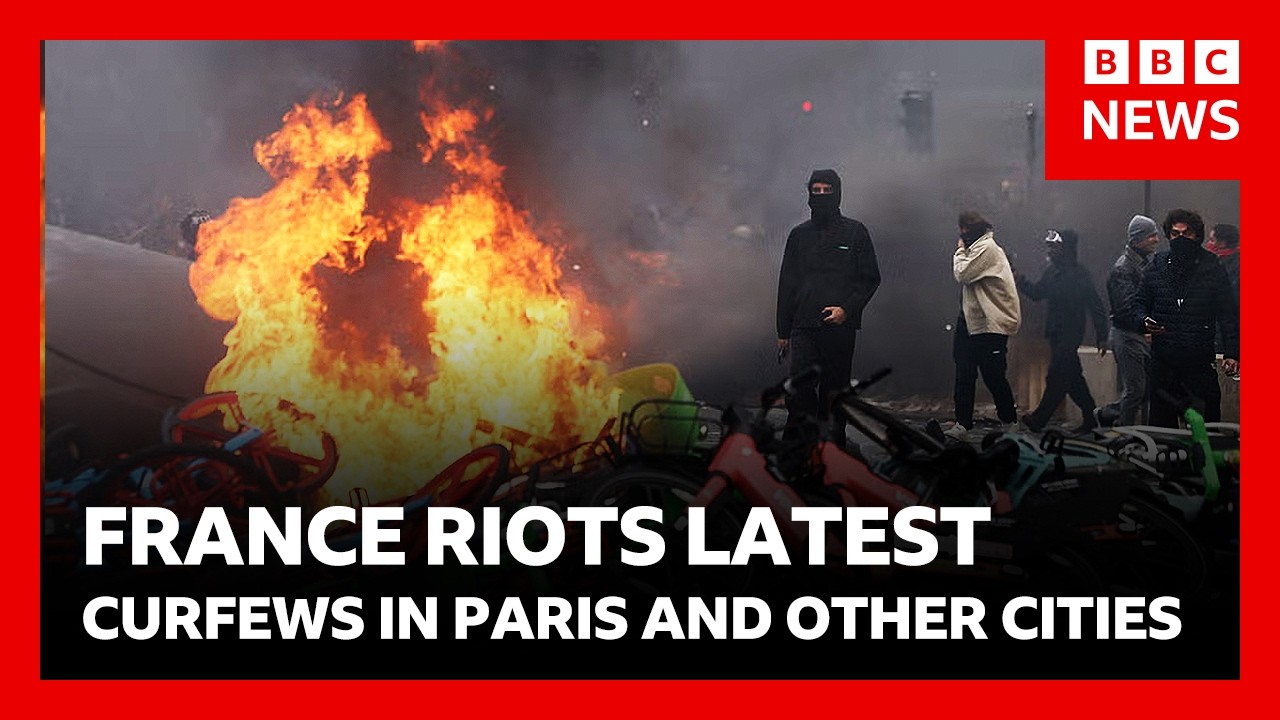
French police have imposed curfews in cities across the country, after days of violent disorder, with shops looted and buildings set on fire.
In parts of central Paris, people will be banned from the streets between 2300 and 0600. In Nice the curfew applies to young people. There are also restrictions in Lyon and Lille.
The Prime Minister French PM Sébastien Lecornu gave local authorities the power to impose the curfews after days of rioting, with thousands of arrests. In a statement, he said: “We will not be dictated and ruled by the breakers, by the thieves, by the thugs”
The disorder began last month with students protesting over school conditions but it has escalated to take in a broader range of grievances.
Lecornu claimed the movement was being led by what he called “ultra-Left radical groups” who he said were hoping to “create chaos” ahead of next year’s French presidential election. More than half a million people took to the streets at the weekend to protest against his government and its policies.
France’s neighbours in Europe are looking on with concern. Many of them, including Italy, Spain, Belgium, Portugal and Albania are seeing their own domestic protests, driven in large part by public anger over price increases and the rising cost of living.
Fiona Bruce presents BBC News at Ten reporting by Nick Beake in France, Nick Thorpe in Albania and Europe Editor Katya Adler.
Subscribe to our channel here: https://bbc.in/bbcnews
For the latest news download the BBC News app or visit BBC.com/news
#BBCNews